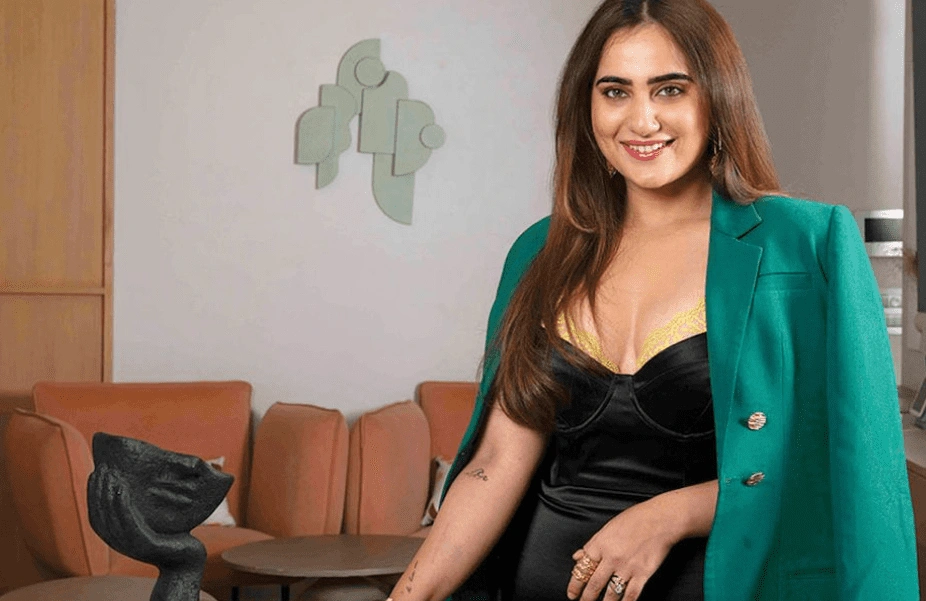
Discover how Kusha Kapila turned internet fame into a $6M funded shapewear empire. A deep dive into Underneat’s business model, revenue, and the rise of creator-led brands in India.
Author: Jimmey Barnwal | December 17, 2025 | 5 min. read
In the fast-moving universe of digital fame, where creators rise overnight and disappear just as quickly, very few manage to convert virality into longevity. Fewer still build companies that outgrow their personal brand.
Kusha Kapila did.
In December, her innerwear and shapewear startup Underneat quietly achieved what most celebrity-led brands never do: it raised $6 million (₹54 crore) in pre-Series A funding, led by Fireside Ventures. The round wasn’t driven by hype, glamour, or social media clout alone, it was backed by revenue, operational discipline, and proof of execution.
For global audiences familiar with creator-turned-moguls like Kim Kardashian (SKIMS) or Sara Blakely (Spanx), Kusha’s journey feels familiar in spirit, but distinctly Indian in execution. This is not the story of an influencer slapping her name on a product. This is the story of a creator who learned the internet, mastered culture, and then built a business underneath it.
Quite literally.
Delhi Beginnings: Where Creativity Met Constraint
Born on September 19, 1989, in New Delhi to a Punjabi family, Kusha Kapila grew up navigating a city that thrives on contradiction, tradition and rebellion, chaos and creativity. From an early age, she showed a flair for storytelling, fashion, and humor, traits that would later define her public persona.
She studied at Indraprastha College for Women, followed by a degree in Fashion Design from NIFT, one of India’s most prestigious design institutions. Unlike many internet celebrities who stumble into fame accidentally, Kusha’s foundation was intentional, fashion, aesthetics, and structure were already embedded in her thinking.
But her early career was anything but glamorous.
In 2013, she started as a fashion correspondent at Apparel Online, a modest role in Delhi’s apparel ecosystem. A year later, she pivoted to copywriting at Razorfish Neev, learning how brands speak, sell, and scale. She wasn’t chasing fame yet, she was learning systems.
That would matter later.
The Internet Finds Billi Masi
Kusha’s first brush with on-screen visibility came in 2014 with a small appearance on Son of Abish. But the real inflection point arrived in 2016, when she joined Times Internet and later iDiva, eventually becoming Head of Content.
It was here that she created Billi Masi.
A caricature of South Delhi elitism, loud, aspirational, absurd, Billi Masi wasn’t just comedy. She was cultural anthropology disguised as humor. The character went viral across Instagram and Facebook, pulling in millions of views and resonating not just in India, but among Indian diaspora in New York, London, Toronto, and Dubai.
Kusha didn’t rely on slapstick. Her humor worked because it was observational, precise, and deeply familiar. She understood her audience because she came from it.
And the internet rewarded her.
From Internet Icon to Mainstream Name
By 2020, Kusha had crossed a boundary most creators never do—she moved from social media into mainstream entertainment.
Netflix’s Ghost Stories, Amazon Prime’s LOL: Hasse Toh Phasse, Masaba Masaba Season 2, Case Toh Banta Hai, judging on Koffee with Karan Season 7, each appearance expanded her reach beyond Instagram.
Her filmography followed: Selfiee, Sukhee, and Thank You for Coming, which premiered at TIFF 2023.
Brand deals multiplied. Her net worth reportedly crossed ₹20 crore. She became one of India’s highest-paid digital creators.
But behind the scenes, something shifted.
“I wanted to build something that lasts,” she said in interviews.
For many creators, fame is the destination. For Kusha, it became leverage.
The Pivot: Building Underneat
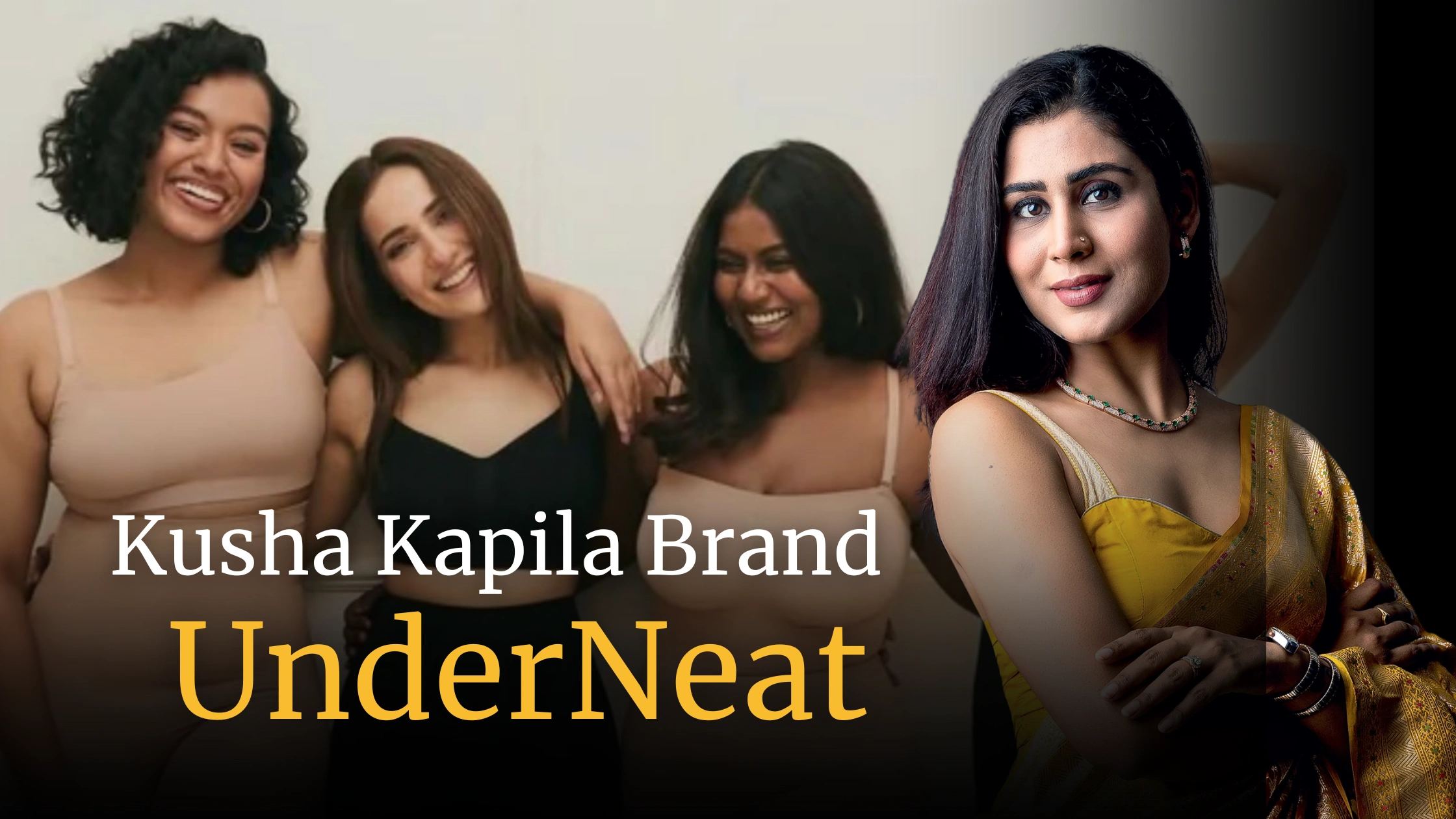
In March 2025, Kusha co-founded Underneat, a D2C innerwear and shapewear brand designed specifically for Indian body types, inclusive sizing, breathable fabrics, functional comfort, and zero performative glamour.
The category choice was deliberate.
Innerwear is one of the hardest businesses in fashion:
- Fit consistency is brutal
- Returns are high
- Manufacturing discipline is non-negotiable
- Brand trust takes time
This wasn’t merch. This was infrastructure.
To make it work, Kusha partnered with Vimarsh Razdan, a retail and manufacturing veteran with over 20 years of experience. An IIM Calcutta alumnus, Razdan had previously scaled businesses at Orient Craft, working with global giants like GAP, Zara, and Marks & Spencer, and managing operations north of ₹500 crore.
Where Kusha brought culture, consumer insight, and distribution, Razdan brought execution, sourcing, and systems.
(Some reports also mention Ghazal Alagh as an early co-founder, adding further consumer brand expertise.)
| Founded | March 2025 |
| Founders | Kusha Kapila, Vimarsh Razdan |
| Category | D2C Shapewear & Innerwear |
| Key Investors | Fireside Ventures |
| Funding Raised | $6 Million (Pre-Series A) |
| Revenue (ARR) | ₹150 Crore ($18M) |
| Status | EBITDA Positive |
Launch Before Launch: Community First
Before selling a single product, Underneat ran a month-long content campaign titled:
“What Are You Wearing Under?”
It wasn’t about selling shapewear. It was about conversation, comfort, body confidence, real experiences. With just a handful of posts, the brand amassed 120,000+ followers pre-launch.
This was creator-led brand building done right:
- No forced virality
- No discount-driven hype
- No celebrity theatrics
Just relevance.
Execution Wins: Revenue Over Noise
Underneat officially launched in April 2025.
Within eight months, it crossed:
- ₹150 crore ($18M) in ARR
- EBITDA positive operations
In a sector where even well-funded fashion startups bleed cash, this mattered.
Products like high-waist tummy tuckers and wireless shaping bras sold out repeatedly. Returns stayed controlled. Repeat purchases climbed.
This wasn’t influence monetization.
This was retail math working in real life.
The $6 Million Vote of Confidence
The $6M pre-Series A round, led by Fireside Ventures, closed rapidly.
The thesis was simple:
Early proof. Hard execution. Underserved category.
For Kusha, it was validation that followers don’t equal fundamentals.
Half of Instagram would be rich if that were true.
The capital will now fuel category expansion, deeper supply chains, and potentially international markets—from fitness-driven consumers in Los Angeles to modest-fashion audiences in the Gulf.
Kusha Kapila and the New Creator Blueprint
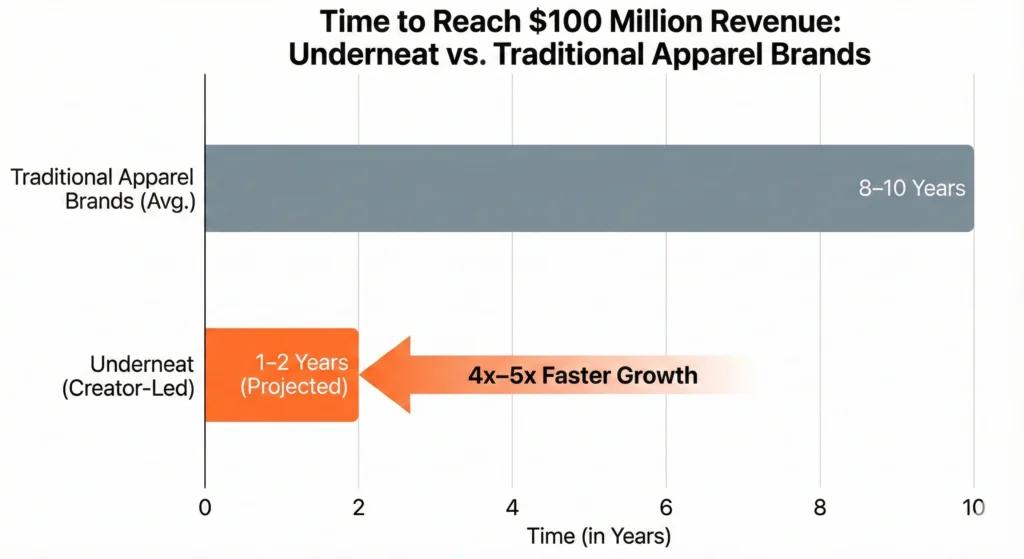
Kusha’s journey mirrors a global shift.
From SKIMS ($4B valuation) to Huda Beauty ($1.2B) to Prime ($1.2B revenue), creator-led brands are no longer side hustles, they are structured businesses.
In India, this wave is just beginning.
With a creator economy projected to cross $500B globally by 2030, and India emerging as one of its fastest-growing markets, the playbook is changing:
- Creators are becoming operators
- Influence is becoming distribution
- Content is becoming customer insight
Underneat sits at the intersection of all three.
Built Under the Spotlight, Sustained Beneath It
Kusha Kapila’s story isn’t about going viral.
It’s about what happens after the virality fades.
She used comedy to understand people.
Used content to build trust.
Used fame to open doors.
And used execution to stay inside the room.
As Underneat scales, it offers more than shapewear, it offers a blueprint for creators everywhere:
The real work doesn’t happen on the feed.
It happens underneath it.
Layer by layer.
Creator-Led Brands: How Influence Turned into Global Business Empires
Over the last decade, the creator economy has undergone a quiet but radical transformation. What began as individuals monetizing attention through ads and brand deals has evolved into something far more powerful: creators building full-stack consumer businesses.
Today’s most successful creators are not just marketers for brands, they are the brands.
Below is a detailed look at the most prominent creator-led companies across the USA, Europe, the Gulf, and beyond, followed by India’s rapidly emerging counterparts. Together, they reveal a clear pattern: creators who understand community, distribution, and product-market fit are building companies that rival traditional startups in scale and valuation.
Global Creator-Led Giants: When Personal Brands Became Corporations
SKIMS — Kim Kardashian (USA)
Valuation: ~$4 billion
SKIMS is widely considered the gold standard of creator-led brands. Launched in 2019, the shapewear company didn’t rely on fashion weeks or retail partnerships. Instead, it launched direct-to-consumer, leveraging Kim Kardashian’s unparalleled social media reach (300M+ followers).
But SKIMS succeeded not because of fame alone. Its real breakthrough was inclusive design, offering extended sizing, neutral skin tones, and comfort-first materials at a time when the shapewear market was outdated and exclusionary.
The result: repeated sell-outs, global distribution, and a valuation that firmly placed SKIMS alongside legacy fashion powerhouses.
Key takeaway: Celebrity gives attention. Product solves retention.
Huda Beauty — Huda Kattan (UAE / USA)
Valuation: ~$1.2 billion | Revenue: ~$250M annually
Huda Kattan began as a beauty blogger in Dubai, posting tutorials and reviews long before Instagram monetization was mainstream. In 2013, she launched Huda Beauty with a simple product: false eyelashes.
Her advantage wasn’t capital, it was credibility. Audiences trusted her because she had taught them for years. Each product launch felt like a recommendation from a friend, not a brand.
Huda Beauty scaled into a full makeup empire, proving that education-first creators often build the most durable brands.
Key takeaway: Authority compounds faster than virality.
Glossier — Emily Weiss (USA)
Valuation: ~$1.8 billion (peak)
Glossier didn’t start as a company, it started as a conversation. Emily Weiss launched Into The Gloss, a beauty blog where readers discussed routines, products, and preferences.
When Glossier launched in 2014, it was built with the audience. Product ideas were crowdsourced. Feedback loops were tight. Marketing felt human.
Glossier showed that community-driven brands can outpace traditional beauty giants, at least until scaling challenges emerge.
Key takeaway: Community is the cheapest R&D department.
Kylie Cosmetics — Kylie Jenner (USA)
Revenue: ~$375M annually
Kylie Cosmetics is often misunderstood as “just celebrity money.” In reality, it was one of the earliest demonstrations of Instagram as a direct sales engine.
Kylie launched lip kits in 2014 using scarcity, drops, and visual storytelling, tactics now common in D2C. Products sold out in minutes.
However, long-term sustainability required partnerships and operational depth, showing that distribution without systems eventually plateaus.
Key takeaway: Launch is easy. Scaling is not.
Prime — Logan Paul & KSI (USA / UK)
Revenue: ~$1.2 billion (2023)
Prime is a masterclass in turning narrative into commerce. What began as a public rivalry between two YouTubers evolved into a joint hydration brand backed by sports marketing, influencers, and cultural moments.
Prime didn’t sell a drink, it sold belonging. Scarcity, hype, and creator ecosystems drove demand across the US and Europe.
Key takeaway: Cultural moments can outperform traditional advertising.
Feastables — MrBeast (USA)
Revenue: $200M+ projected
Feastables is less about chocolate and more about distribution physics. MrBeast understands attention at scale better than almost anyone alive.
Every product launch is embedded inside viral content, giveaways, and stunts, turning entertainment into acquisition.
Key takeaway: When content is the funnel, CAC collapses.
Ipsy — Michelle Phan (USA)
Revenue: ~$500M annually
Michelle Phan pioneered beauty content on YouTube before “creator” was a job title. Ipsy grew from her tutorials into a subscription-based discovery platform, personalizing beauty at scale.
Key takeaway: Subscription models reward trust, not hype.
| Brand | Creator | Country | Category | Valuation / Revenue |
| SKIMS | Kim Kardashian | USA | Shapewear | ~$4 Billion Val. |
| Huda Beauty | Huda Kattan | UAE/USA | Beauty | ~$1.2 Billion Val. |
| Prime | Logan Paul & KSI | USA/UK | Beverages | ~$1.2 Billion Rev. |
| Feastables | MrBeast | USA | FMCG | ~$200M+ Rev. |
| Underneat | Kusha Kapila | India | Shapewear | $18M ARR |
| Kay Beauty | Katrina Kaif | India | Beauty | High Growth (Nykaa) |
| Youthiapa | Bhuvan Bam | India | Merch | Undisclosed |
The European & Lifestyle Layer
Brands like Sweat (Kayla Itsines), Top of the Morning Coffee (Jacksepticeye), and XIX Vodka (Sidemen) show how creators expand into fitness, food, and alcohol, often using catchphrases, lifestyles, or communities as brand anchors.
These brands may not always disclose valuations, but they demonstrate one thing clearly:
Creators can enter almost any category if identity and product align.
India’s Creator-Led Brands: Early, But Accelerating Fast
India’s creator economy is younger, but scaling rapidly. With over 4 million creators and rising disposable incomes, the ecosystem is moving from merchandise to serious D2C businesses.
UnderNeat — Kusha Kapila
Funding: $6M | ARR: ₹150 crore
UnderNeat stands out because it avoids the most common creator mistake: over-reliance on personality.
Instead, it focuses on product-market fit, manufacturing excellence, and operational leadership, while using Kusha’s influence as distribution, not the product itself.
It represents India’s first wave of globally competitive creator brands.
Youthiapa — Bhuvan Bam
Built from BB Ki Vines characters, Youthiapa proved how YouTube fandom can translate into physical demand. Though valuations aren’t public, it validated merch as a first step in creator commerce.
House of Masaba — Masaba Gupta
One of the earliest examples, blending fashion credibility with Instagram influence. Its acquisition by Aditya Birla Fashion signaled institutional confidence in creator-led labels.
Kay Beauty — Katrina Kaif
Integrated into Nykaa’s ecosystem, Kay Beauty demonstrated how celebrity + platform distribution can scale quickly in India’s beauty market.
Others:
Brands like Anomaly (Priyanka Chopra), Hyphen (Kriti Sanon), Label MN, DeeClothing, and Arabella show increasing category diversification, skincare, streetwear, and lifestyle.
Most are still early, but the direction is clear.
The Bigger Picture: Why This Is Just the Beginning
Creator Economy by the Numbers
- $200B market in 2024
- Projected $500B by 2030
- Potentially $1T+ by mid-2030s
- CAGR: 22–26%
India alone has grown its creator base 4× in four years.
1. AI as a Force Multiplier
AI tools are collapsing production costs, editing, scripting, repurposing, personalization, allowing creators to scale like companies.
2. Monetization Beyond Ads
Subscriptions, affiliates, D2C, communities, and tokenized ownership are reducing platform dependency.
3. Short-Form Dominance
90% of internet traffic now flows through short video, perfect for creator-driven discovery.
4. Trust > Reach
Audiences trust creators more than brands. That trust converts.
The Hard Truth: Not Everyone Wins
- Only 1% of creators earn full-time incomes
- Algorithms are volatile
- Tool fragmentation is real
- Fame without systems doesn’t scale
This is why the next wave of winners won’t be the loudest, but the most structured.
Looking Ahead: 2026 and Beyond
The creator economy isn’t overcrowded, it’s undeveloped.
The future belongs to creators who:
- Build owned audiences
- Think like operators
- Use AI as infrastructure
- Prioritize longevity over virality
Creators are no longer influencers.
They are founders in disguise.
And brands like UnderNeat show that the next global consumer giants may not come from boardrooms—but from timelines.
| More about the Story (Top sources) | URL |
| “Underneat” | https://underneat.in/ |
| “Fireside Ventures” | https://firesideventures.com/ |
| “$6 million (₹54 crore)” | https://yourstory.com/2025/12/underneat-pre-series-a-funding-fireside-ventures |
| “NIFT” | https://nift.ac.in/ |
| “SKIMS ($4B valuation)” | https://sacra.com/c/skims/ or https://www.forbes.com/ |
| “$500B globally by 2030” | https://www.grandviewresearch.com/industry-analysis/creator-economy-market-report |
| “Kusha Kapila” | https://www.forbesindia.com/lists/2023-digital-stars/profile/kusha-kapila/42 |
Our Best Reports:
- The Great Indian IPO Scam: voice.infloia.com/the-great-indian-ipo-scam
- While other AI sectors face financial risks: https://voice.infloia.com/ai-bubble-oracle-openai-nvidia-crisis/
- The Brutal, Beautiful Reality of Building a Startup: https://voice.infloia.com/the-brutal-reality-of-building-a-startup/